Skip to Main Content

Sharonville Police Department Groundbreaking Event

This past week, Kleingers attended the Sharonville Police Station groundbreaking ceremony. An updated station will help the Sharonville Police serve us more efficiently and allow for updated technology. The modern design is driven by function and will allow future growth for the police department and the community.

Fun fact: the original station, built in 1958, contained a cell so old a movie company wanted to use it to film a 1940s jail scene.

What’s In a Name?

What’s in a name? Well, a lot, especially when it’s a name some have a hard time saying! Watch how many different ways Kleingers is pronounced.

Our New Destination

The Kleingers Group’s vision is to be a destination for our people and the market. Realistically, that means being a company clients choose to work with and employees want to be a part of. The physical space is a critical component of that. Our former building didn’t match that vision.

Based on feedback from our own employees, we built a new space that boasts their specific goals in mind. The new office features:

• Nine different types of rooms, ranging from large conference rooms to small huddle spaces for just a few people to a private room for marking up plans digitally
• An additional ten different open collaboration spaces, ranging from a central team table to couches and coffee tables, to a coffee nook
• Digital connectivity from every room
• Interior garage doors to allow for more flexibility in the training space
• Lots of glass to provide plenty of natural light
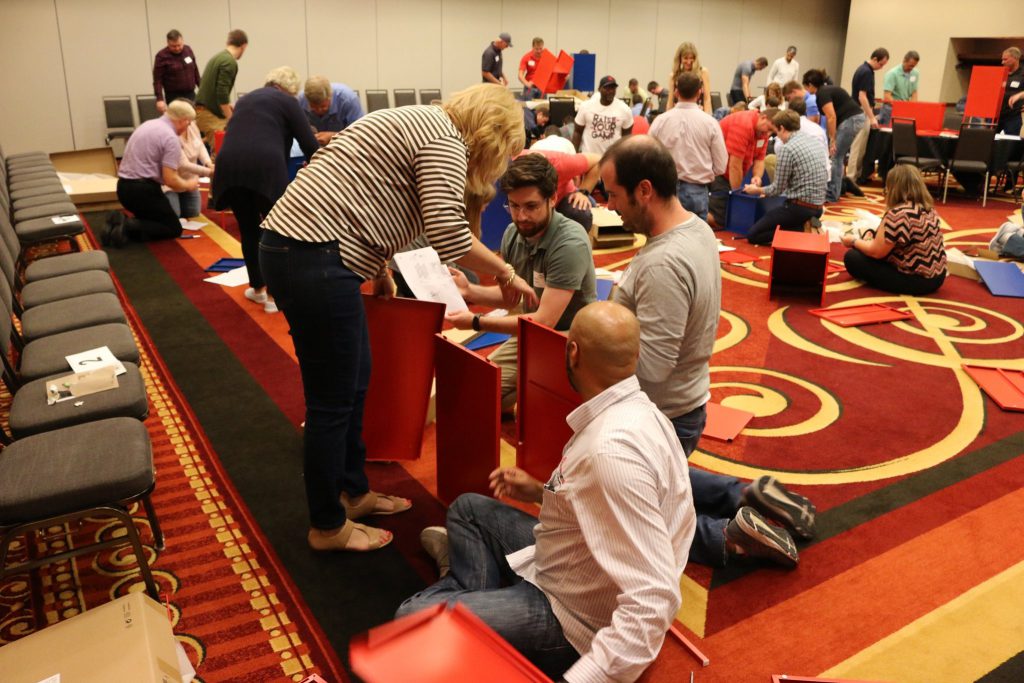
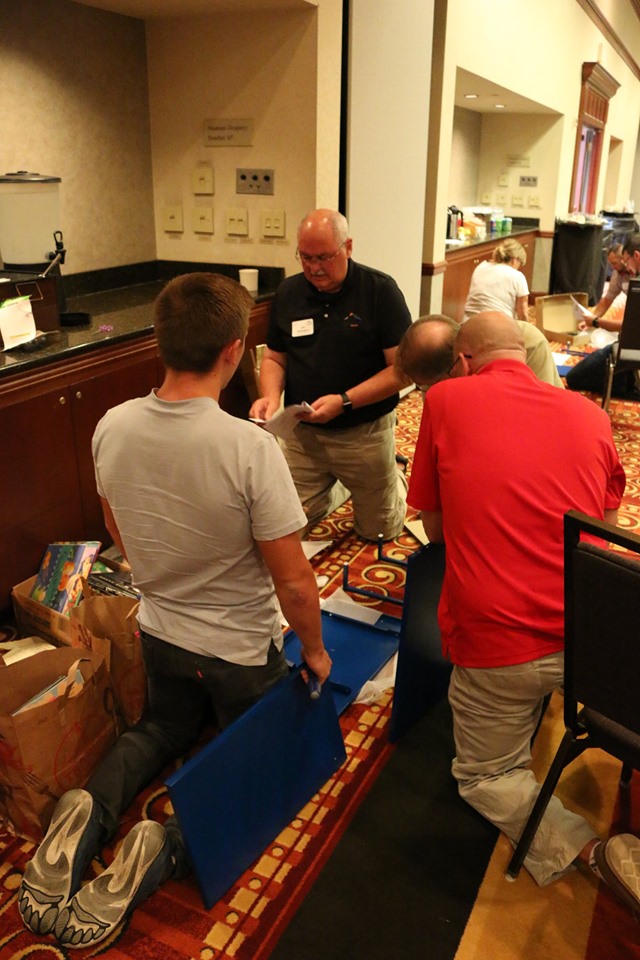
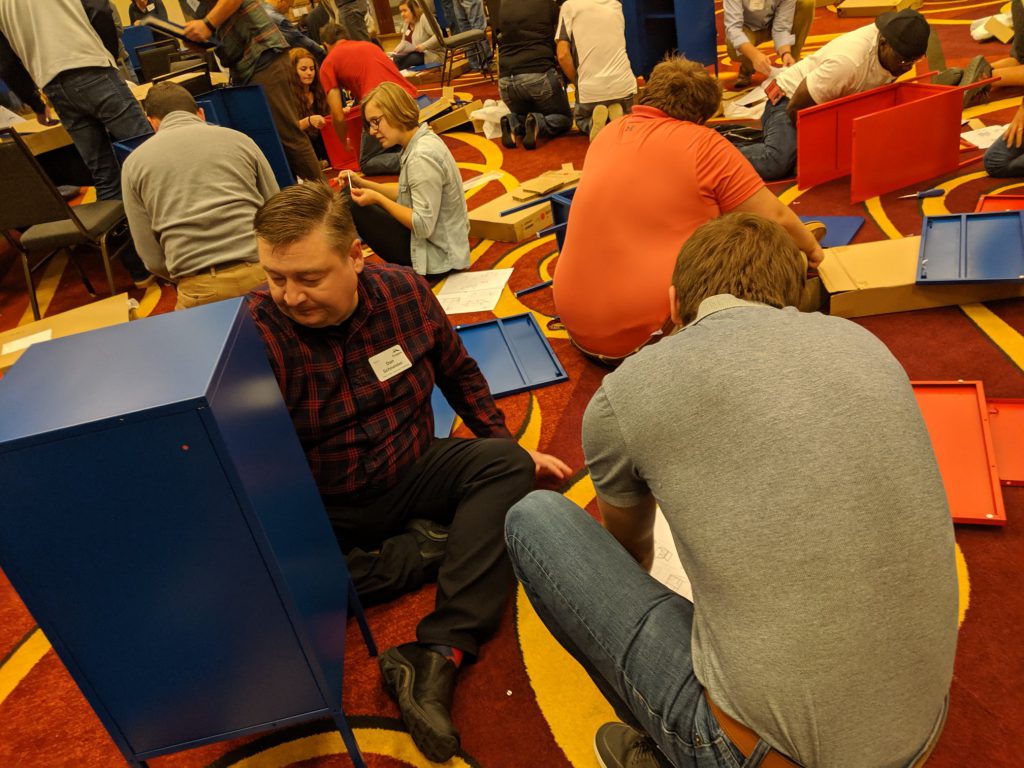
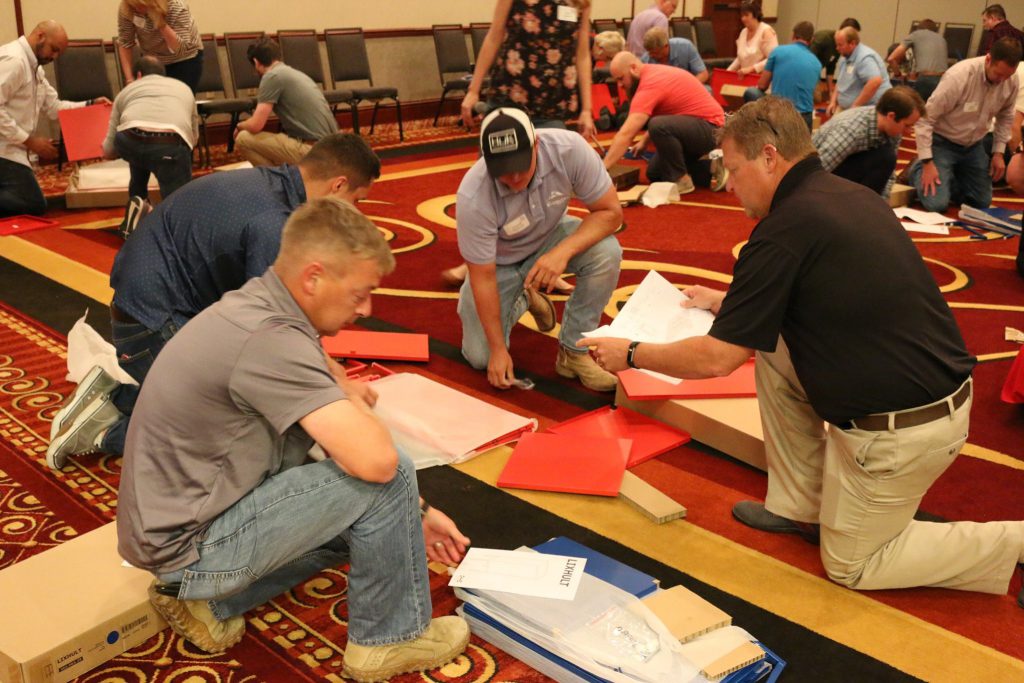
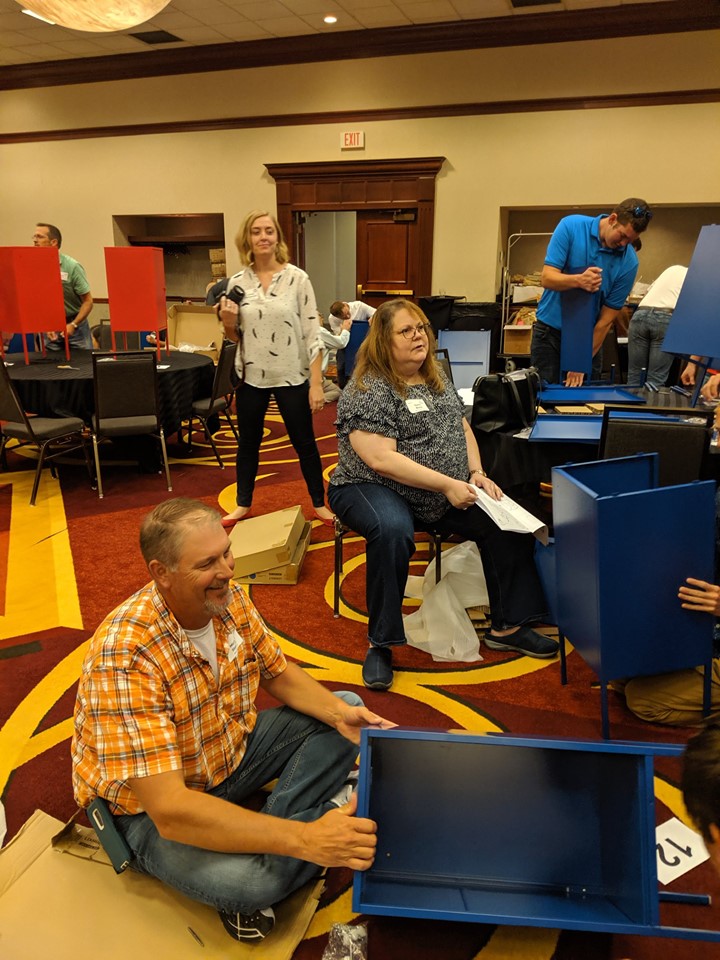
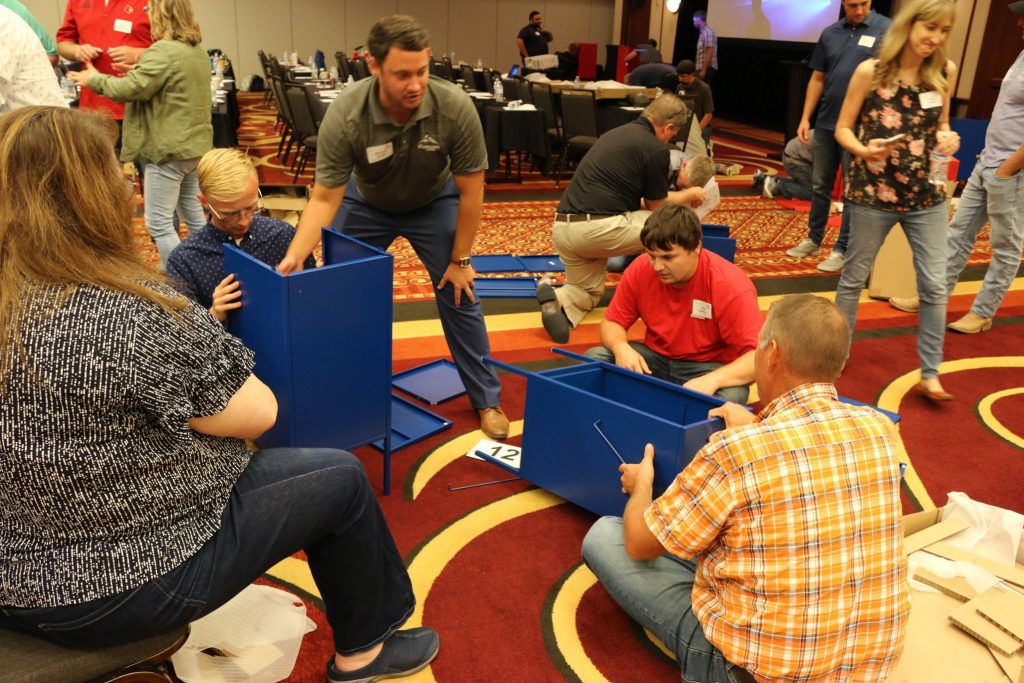
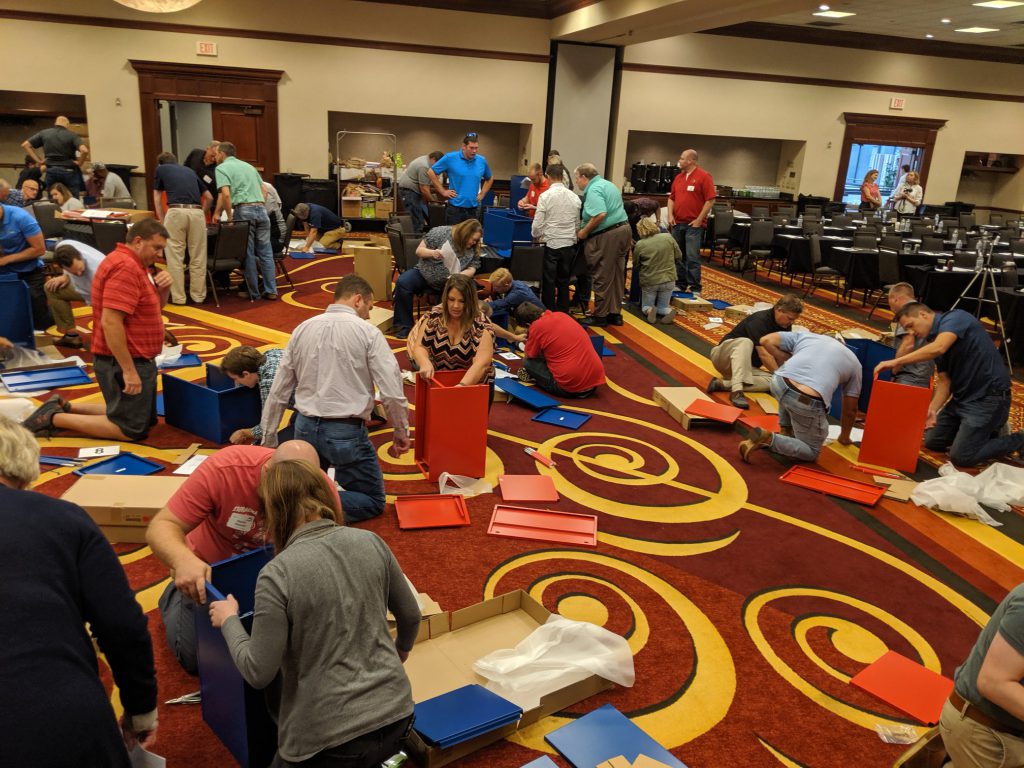
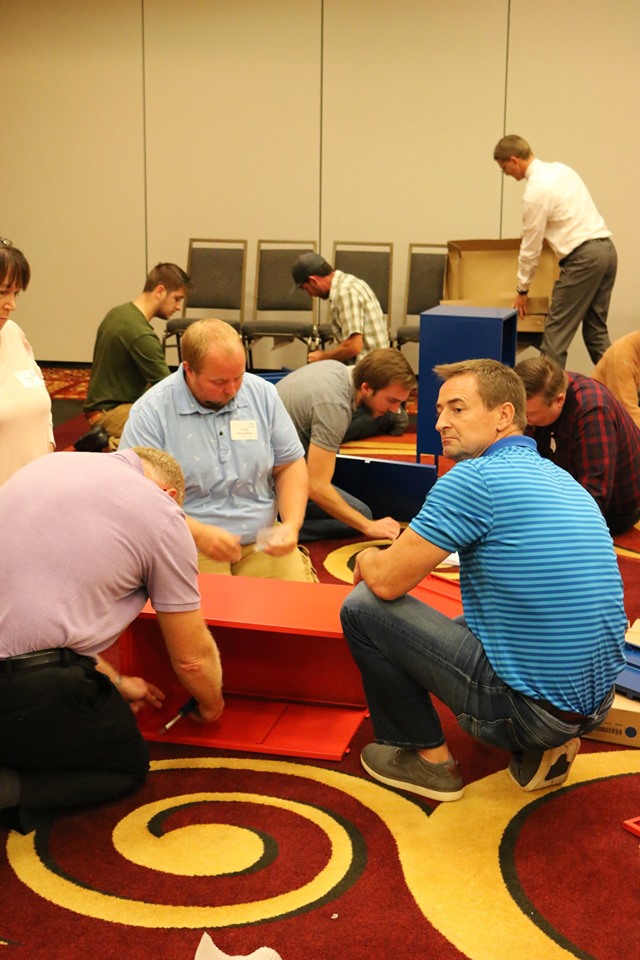
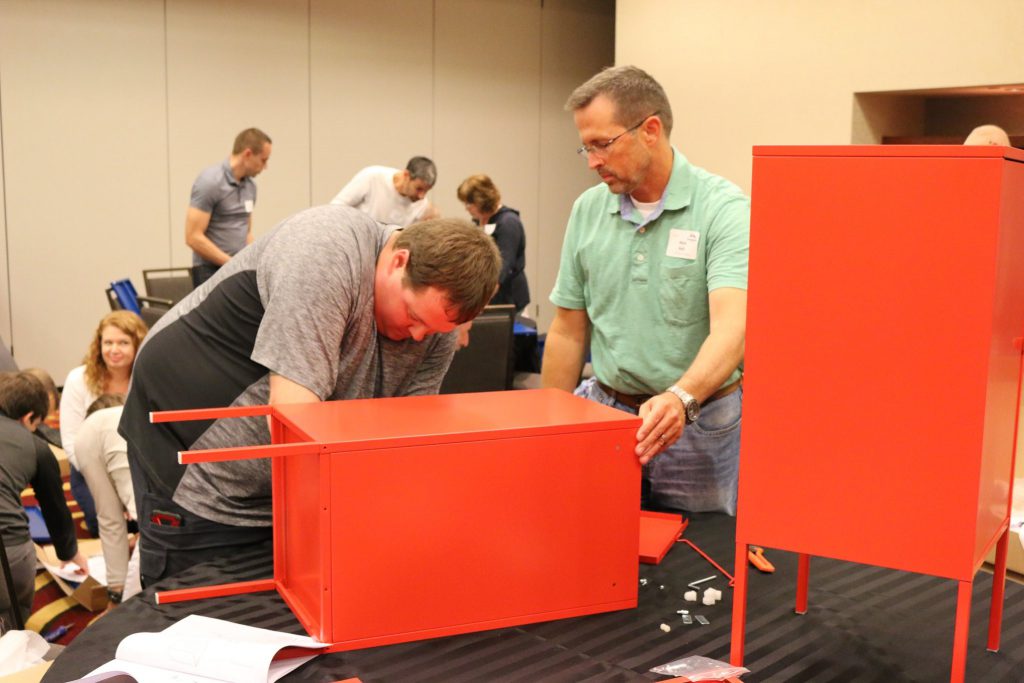
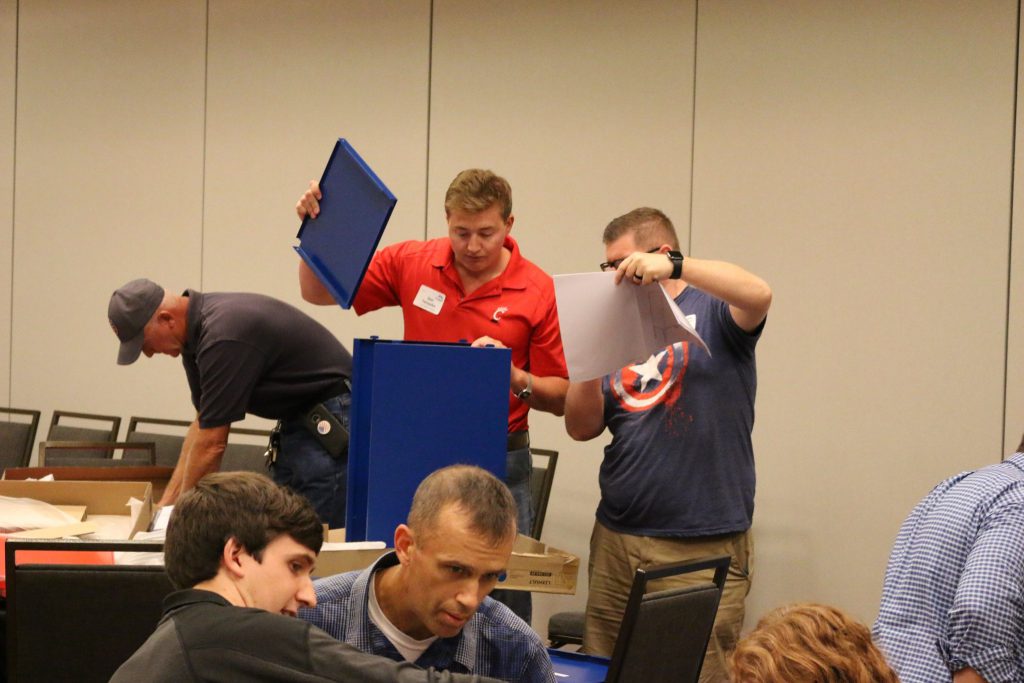
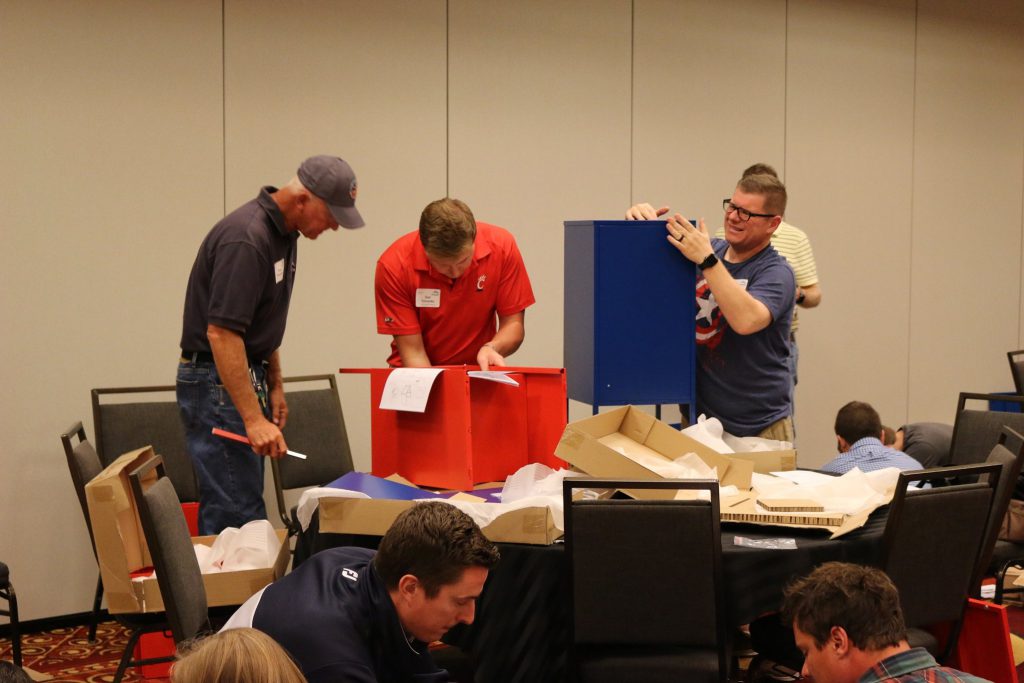
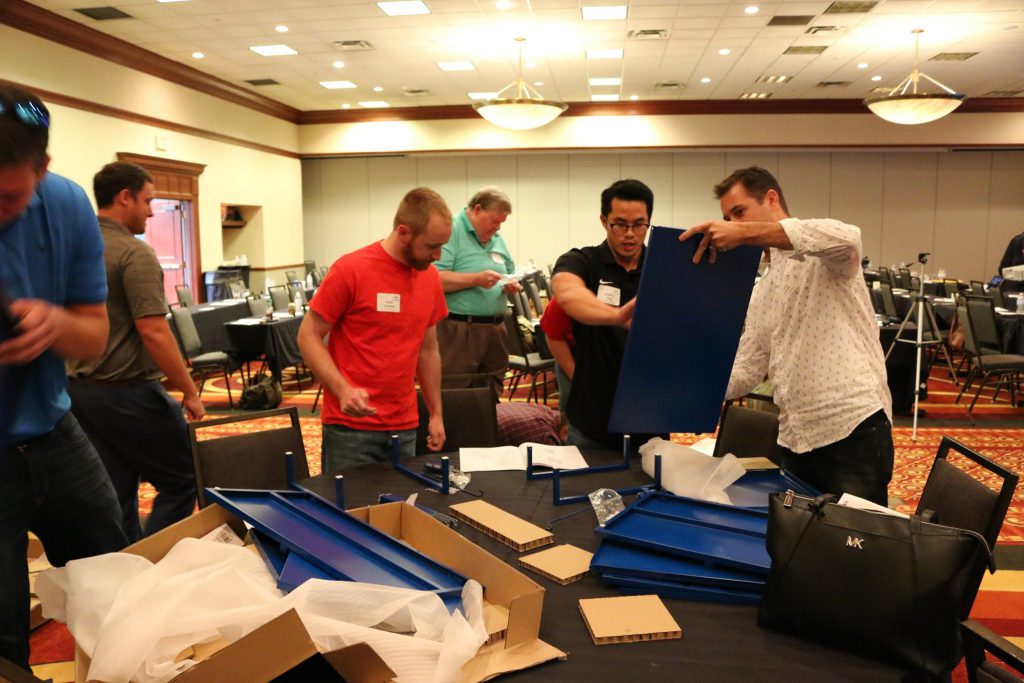
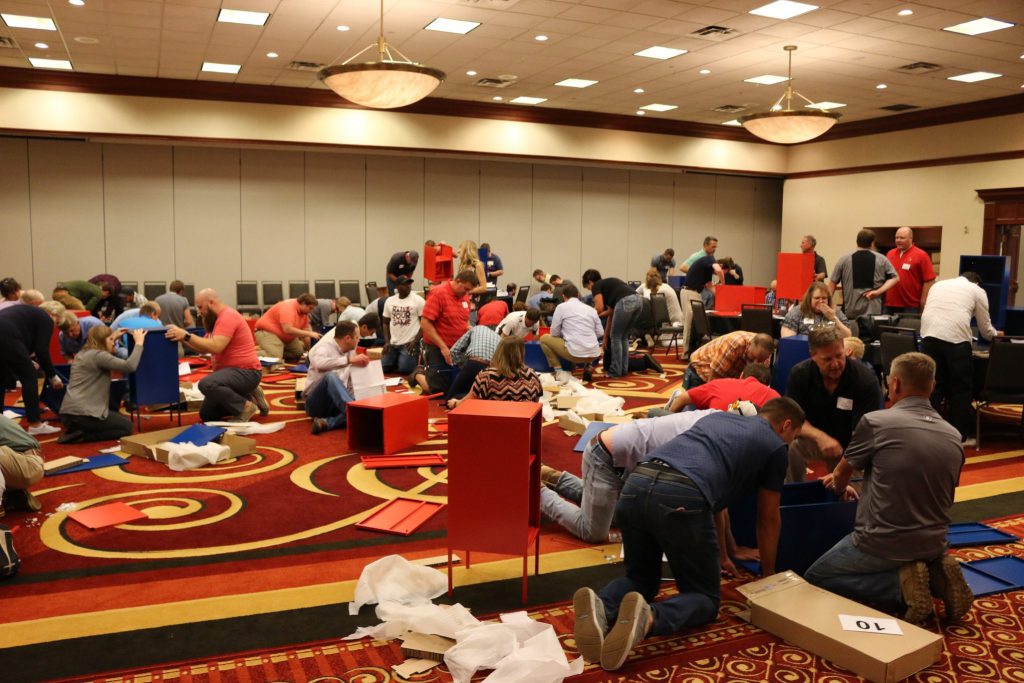
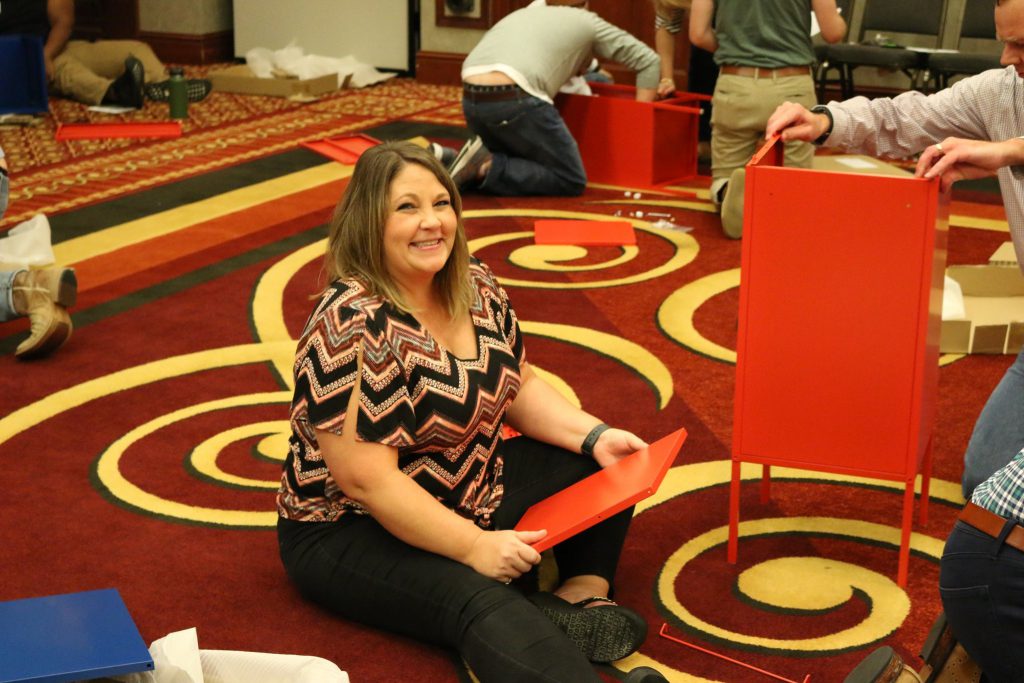
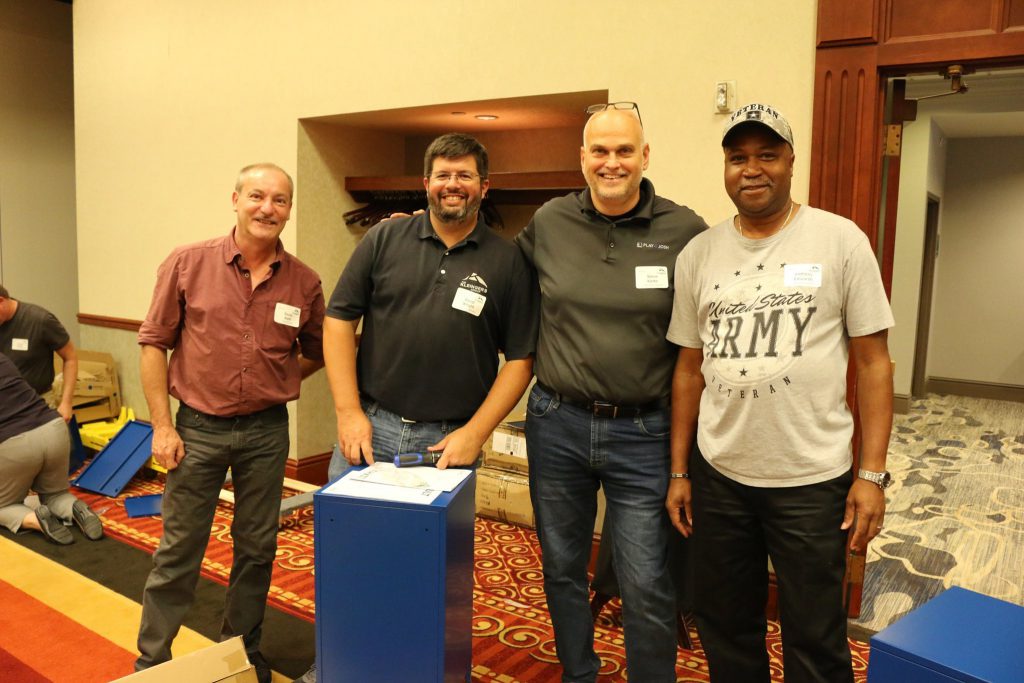
• Custom built tables and wall enhancements built by employees

Conference Room “The Destination”

The new space is an employee-focused environment with the same setup for new co-ops as is available to the CEO. It was built with the intention of creating a comfortable space that provided some of the luxuries of working from home or a nearby coffee shop while creating a space that employees are proud to show off.

Sharkey’s Tavern

The office combines many of the aspects more common in downtown offices, such as open space and a variety of huddle spaces. Additionally, it boasts some of the advantages of a more suburban office, such as more generous space per person, easy parking, and larger communal spaces.

Huddle Space “El Taco”

Further Growth for the Landscape Architecture Group

Kleingers’ landscape architecture group adds another to their ranks! We are pleased to have Jessica Rybolt join us as a Landscape Designer. She is a graduate with a BS in Landscape Architecture from The Knowlton School of Architecture at The Ohio State University. After receiving her degree, Jessica returned home to Cincinnati where she worked several part-time positions. Jessica designed residential landscapes and outdoor living spaces. In her role, she met with clients, created Sketchup models, calculated estimates, and wrote proposals.

During college, Jessica interned with OHM Advisors in Landscape Architecture and Planning. This exposed her to a variety of residential, commercial, and mixed-use development projects through the firm’s private development planning group. Jessica created illustrative plans for multiple downtown revitalization projects for this group.

While she enjoyed tackling a new project every day in her previous part-time positions, she is finding tremendous reward in the research and development that goes into larger projects at The Kleingers Group. Jessica shared that she “wanted to be part of a team that truly cares about the work and is involved in a variety of interesting projects.”

She is a great addition to our landscape architecture group. We look forward to seeing the designs she’ll create for Kleingers’ projects. Welcome, Jessica!

Special Interests/Hobbies:

Jessica enjoys painting in her free time. Her typical medium is acrylic on canvas.

One thing you would like others to know about you?

“I chose to pursue a career in Landscape Architecture because I want to design spaces that positively impact people’s lives.”

Book Drive for Adopt a Book


For the month of November, The Kleingers Group hosted a book drive to support the Adopt a Book foundation. Adopt a Book is a non-profit organization dedicated to providing disadvantaged kids, located in the Greater Cincinnati and Northern Kentucky areas, with books of their own. We were thrilled to support such a worthy cause for our communities.

Throughout the month, employees had incentives to donate. These incentives came in the form of weekly raffle drawings for $25 Visa gift cards. On top of that, the group that donated the most books received a pizza party. Let’s just say that people were

Books were gathered and the month came to an end with great results. We collected 1,175 children’s books, 60 bookmarks, and 32 tote bags! In the end, the West Chester Survey Group were the big winners of the pizza party.

Thank you everyone for your participation in the book drive!


The Kleingers Group Celebrates 25 years!

More than 150 of our employees and guests joined us in Nashville to celebrate The Kleingers Group’s 25th anniversary. What a milestone! And what a privilege to work with such an amazing, fun-loving group of people. We won’t even tell you quite how much fun we had!

Cheers to the 25 years that turned 5 guys in a basement into the extraordinary company we are lucky to be a part of today.

Please check our our Facebook page for more fun photos of this event!

Tennis Court Rust Spot Repair Options

Remediation offers various solutions, but the following are the ones most frequently discussed:

  1. Remove the contaminated aggregate.
  2. Cover the contaminated aggregate with an acrylic surface coating utilizing a rust inhibitor/stain blocker.
  3. Cover the contaminated aggregate with a polyurethane surface coating.
  4. Cover the contaminated aggregate with a tennis court “mat” system.
  5. Cover the contaminated aggregate with a new surface course of asphalt.

Option 1 – Remove the Aggregate:

Summary – Contractor drills out all the visible iron pyrite. The holes are patched with an acrylic patch binder. Apply rust inhibitor and new court surface paint.

  • Pros – The source of the staining is completely removed from the surface.
  • Cons – May not get every piece of iron pyrite.
  • Cost – Medium, labor-intensive
  • Level of Success – High

Option 2 – Cover aggregate with an acrylic surface coating for tennis courts utilizing a rust inhibitor/stain blocker:

Summary – Contractor applies rust inhibitor. Either paint on exposed aggregate, covers the entire court, or both; one or two coats. Some products are installed as a primer, while some are mixed with the color coatings. The initial coat is intended to “encapsulate” the iron pyrite. Products mixed in with the surface are intended to minimize staining. The rust inhibitor products are generally products developed to improve bonding to greasy or oily surfaces. These are what encapsulates the iron.

  • Pros – Simple installation. Common in many industries.
  • Cons – Iron pyrite that is not exposed is not “encapsulated.” Latex is a permeable breathable surface. The permeability allows moisture into the surface which can contact iron that is not encapsulated which will then rust and stain the new surface. Be aware that rust spots will come back through the surface. The rate of success is as low as 60% to as high as 85%. Rust can be expected to reappear in two to five years.
  • Cost – Medium
  • Level of Success – Medium

Option 3 – Cover the contaminated aggregate with a polyurethane surface coating:

Summary – A polyurethane waterproofing membrane is installed across the entire court.

  • Pros – The polyurethane coating is non-permeable, which stops surface water from reaching the iron pyrite.
  • Cons – Trapping moisture under the surface and not allowing it to breathe could cause blistering. Moisture from under the surface being heated on hot summer day, forcing water vapor to rise and hit the iron pyrite, causes rust which may push through the surface.
  • Cost – Medium-high
  • Level of Success – Medium to high

Option 4 – Cover the contaminated aggregate with a “mat” system:

Summary – A thick (+/- 3/16”) mat court system is installed across the entire court area.

  • Pros – The surface is guaranteed for 25 years. The surface will prevent asphalt cracking, the most common failure mechanism for outdoor asphalt courts, from reaching the surface.
  • Cons – Below surface water could push through the surface carrying rust particles and stain the surface.
  • Cost – Very high
  • Level of Success – High

Option 5 – Cover the contaminated aggregate with a new surface course of asphalt:

Summary – Install a new course of asphalt with properly sourced aggregate and re-paint courts.

  • Pros – Extends life to the existing courts.
  • Cons – Requires milling or raising of net posts will have a lip at the fence edges.
  • Cost – Medium-high
  • Level of Success – High

Sources of Information:

  1. Paul Harris, California Products – Internationally known tennis court surface manufacturer.
  2. Rob Righter, Nova Sports U.S.A. – Internationally known tennis court surface manufacturer.
  3. Andreas Schulze Ising, American Polymer Technologies (APT) – Internationally known polymer company specializing in sports surfaces.
  4. Jeff Gearheart, SportMaster Coatings – Nationally known tennis court surface manufacturer (also has pavement sealant side of business).
  5. Chuck Sperrick, Neyra Industries – National tennis court surface manufacturer (also has pavement sealant side of business).
  6. Jeff Henderson, Tennis Technology – Regional Tennis Contractor.
  7. Jim Lathrop, Total Tennis – Regional Tennis Contractor.
  8. Rich Vettle, ABCO Paving – Regional Tennis Contractor.
  9. David Baird, Industrial Surface Sealer, Inc. – Regional Pavement Maintenance Contractor.

Linking Real-World Engineering Problems to K-12 Educators & UC CEEMS

Studies have shown for decades that the integration of STEAM programs within K-12 education is important to the development of students. These programs are designed to set up children earlier with a strong understanding of STEAM skills, while cultivating students as a future interest for national economic prosperity.

Over the past several years Steve Korte, Group Leader for Kleingers’ Southwest Ohio Institutional Group, has volunteered in many ways for the University of Cincinnati CEEMS program. The Cincinnati Engineering Enhanced Mathematics and Science Program (CEEMS) is led by the University of Cincinnati in partnership with 14 Cincinnati-area school districts. One of the main goals of UC’s CEEMS program is “real world applications: connections to engineering,” and the classroom presentations provide great linkage for the students in understanding how the subjects they are learning apply to the “real world.”

During the program, teachers design a challenged-based learning activity to engage their students in decision making, strategic planning and evaluate plan revisions. At the end of each session, participating teachers are given the opportunity to present their final “units,” displays and videos for judging. Steve served as a volunteer judge during the Closing Day Showcase earlier this month, providing constructive feedback and guidance to the educators.

“As a graduate of the UC College of Engineering, I take tremendous pride in being able to connect back via CEEMS,” says Steve. “It is a great way for me to give back to my community all while educating the stewards for the next generation of engineers” he continues.

The Oak Hills School District, Steve’s alma mater, is a partner in the CEEMS program. “Many of my formal education worlds come together through the CEEMS program. I have been able to take back my professional experience and college education at UC to teach students about how math and science really come together. I even had the opportunity to present at Delhi Middle School, my old stomping grounds,” Steve shared.

Through many years of volunteering, Steve has grown many relationships with teachers and administrators in the Cincinnati area, which has led to several classroom presentations to middle school and high school math/science students. Steve has also sat on numerous panels in an open forum with math and science teachers to discuss what engineering companies are looking for in college graduates (technical skill sets, software programs and soft skills).

“As a group of engineers, surveyors and landscape architects who use math, arts and sciences every day, it is important to myself and others at Kleingers to educate teachers. Giving teachers the tools to explain real-life applications and how STEAM subjects impact their students’ future careers is huge,” says Steve.


To learn more about the University of Cincinnati’s CEEMS program, visit their website: http://ceas.uc.edu/special_programs/ceems/CEEMS_Home.html

Learn more about the “Closing Day Showcase” here: http://ceas.uc.edu/news-1314/ceems-closing-day-showcase-facilitates-promising-classroom-resul.html


10 Things to Consider When Planning a Sports Park

It’s not every day that an Owner takes on planning a 100+ acre sports park, but when the scenario arises, The Kleingers Group brings proven experience to the team. Over the years, Kleingers has designed a number of large-scale sports parks and has found that many of the same considerations tend to come up during our design process. We would like to share with you what to consider before you take on your sports park design.

1. Connect to Existing Community Assets

Creating transportation linkages to other community resources such as parks, schools, YMCAs, and more will encourage participation at the new development. Pursue ways to blend the new park with its surroundings and work with neighbors and stakeholders to build support for the project. Leverage connections through existing infrastructure like trailways, complete streets, and other multi-modal systems will provide easy access for bicyclists and pedestrians who visit the facility.

2. Create a Site that is Safe, Easy to Use, and Navigate

Speaking of connecting the site with pedestrians, it’s also important to design ways to keep them safe, especially from vehicular traffic. Maintain separate vehicle travel zones and pedestrian travel zones when possible and provide for safe and clearly marked crosswalks to help minimize conflicts. Branding, wayfinding, and creative use of landscape theming will help visitors with vehicles travel to their destination within the site more efficiently while minimizing user frustration.

Oftentimes, large sports complexes lack adequate wayfinding due to oversight or budget concerns. Proper wayfinding design can help users get to where they need to be while also creating a recognizable brand for the sports park and the associated owner.

3. All Sports Park Owners are in the Parking Business

Did you know that many competitive organizations that bring tournaments to sports parks require minimum parking per event? Organizers hosting tournaments require anywhere between 50-100 spaces per field, some require even more. Believe it or not, sports park owners are in the parking business. Visitors have high expectations that parking should be easy and accessing their field shouldn’t be a hassle. Tournament organizers must meet the demands of their clients, which means balancing the site’s infrastructure is important to everyone’s bottom line. Planning for enough parking close to destination points within the design allows for better traffic flow and provides better ADA access throughout the site.  The site layout needs to balance ease of access without being interrupted by large parking areas, or losing the vibrancy of an active and energized park.

4. Plan for Flexibility: Master Planning the Site for Optimum Use

Creating a park with the most flexible layouts will mean more options for end-users. Engineering the field grading is a key component. Fields should be carefully engineered to accommodate high-end games and large events with the ability to host smaller games within the same space without compromising the playable area, including crowns and field orientation.

Master planning a complex for multiple sports provides flexibility when attracting special events. Understanding how to plan for and design sports parks for flexibility amongst sports, whether soccer, football, lacrosse, rugby, Australian football, ultimate frisbee, baseball, softball, or cricket will attract a larger audience. Knowledge of national sports trends will allow the field designer to guide a client through the planning stages while meeting their needs and measured desires within the area.

5. Coordinate with Local Municipalities

Working with local interests and shareholders during the design process helps to ensure that everyone has a voice in the process of designing the sports park. Creating opportunities for partnerships early will help generate buy-in from key stakeholders and community members. Our experience in working through this relationship helps guide programming, affordability, and ultimately desired priorities.

6. Plan for Extra Traffic in the Area

More often than not, any new development brings additional traffic to a site. Traffic engineers can provide traffic studies to better understand current traffic conditions and anticipated changes and recommendations.

7. Sports Engineering is Key: Grading, Drainage & Field Performance Will Keep Them Coming Back

Creating space for tournaments is big business and retaining that business helps any sports park be successful. If the grading, slopes, drainage, playing surfaces, and other amenities are not designed properly, tournament organizations will take their business down the road to the competing sports park. Competitive organizations have a business to run and their business model depends on feedback from players and parents who use the fields, facilities, and park amenities at these events. Positive survey feedback will increase the chances that they return again for another event.

8. Plan for Attendees Who are not Players or Spectators

A large portion of the sports park business is creating a fun and comfortable experience for attendees. Creating spaces, such as playgrounds, within eyesight of a group of playing fields keeps that family with one child playing in the game and another bored on the sideline entertained and comfortable. Providing a trail system allows for visitors to take a break between tournament games, connect to another game across the complex, or meander to a ‘hub’ with concessions and restrooms nearby. Trails also appeal to pedestrians and bicyclists across the community.

9. Create a Space for Vendors

An often-overlooked element of the sports complex business is providing adequate space for vendors who are often on hand during a sporting event selling sports equipment, promotional items, and more to parents and other attendees. Creating ‘vendor zone’ spaces convenient to tournament sites is a key selling point to those looking to bring competition to the area.

10. Plan for Championships and Celebrations

Another trend in design that we see is the inclusion of championship fields. These higher-quality fields, sometimes utilizing synthetic turf, are designed with more seating and are typically located in prominent areas of the complex to draw more crowds as competitions wind down. Additionally, we see the integration of amphitheater spaces where teams celebrate their accomplishments with awards ceremonies.

Summary

These design considerations are a fraction of the items to explore when creating a sports park. At Kleingers/Sportworks, we understand the business of sports parks, the competition that takes place inside and outside the park, and the investment owners take in creating these opportunities for revenue. We also understand good engineering, traffic, sports field engineering, survey and landscape design, and the importance of getting all of these things done right for the bottom line and ultimate success of any sports park complex.

Landscape Architecture Team Grows

The Kleingers Group has seen continued growth for its landscape architecture group. To help support the growing demand for these services, Kleingers recently hired Mike Slagle, PLA, ASLA who will serve as an Assistant Project Manager from our West Chester office.

After receiving his degree in landscape architecture from the University of Kentucky, Mike worked for a local firm nearby in Lexington, KY prior to moving to South Carolina where he worked for an international design firm who employs over 20,000 people. When asked what drew him to Kleingers, he responded “Kleingers is comfortably sized, large enough to take on a variety of large scale high-end projects, yet small enough to gain experience through a gamut of projects.”

Mike is a licensed landscape architect in South Carolina and is looking to add Ohio to his list. He brings a wide variety of experience from prominent design projects, such as a historic Level 1 property renovation, which included renovations of garden space at the governor’s mansion to providing landscape design for a 6,000 acre mixed-use development. The branded requirements for this neighborhood required designed greenspace for anyone within a 5-minute walking distance across the property. He is also skilled in projects that include signage design, roundabouts, roadway improvements, master planning and construction administration.

Mike’s wife is a pediatrician, who recently began her fellowship with Cincinnati Children’s Medical Center. As they looked to relocate to the area to be closer to family, Mike found the position at The Kleingers Group to be a good fit in his search for a new job.

“I was drawn to Kleingers’ mantra of ‘doing the right thing,’ where it is important to provide quality work,” Mike said. “All of which seems to be a core value lacking in today’s world,” he continued.

Mike is an avid golfer, enjoys hiking, a self-proclaimed bourbon enthusiast and HUGE Dave Matthews Band fan. Mike grew up a DMB fan as the band got their start near his hometown in Virginia. Mike and his wife are expecting their first child next month.

Considerations When Planning Next Large-Scale Complete Streets Project

Case Study: Wilmington Pike and Feedwire Road Roadway and Intersection Improvements


Construction was recently completed on the multi-phase project which took a major intersection within Montgomery County from 3-lanes to 9-lanes at the largest point. Already a highly traveled area in the county, a new adjacent development was driving the need for improvements at a large scale. The project area is populated with many retail establishments, restaurants, and homes.  All of these stakeholders would be impacted by the development that included Costco, Kroger Marketplace, Cabella’s, and additional outparcels with smaller retail and restaurant space.

The Kleingers Group worked closely with the City of Centerville, homeowners, business owners, and other stakeholders to ensure the design would meet increased traffic capacity needs, accommodate pedestrians, and help keep area businesses operational.

Below are examples of things to consider when planning your next large-scale complete-streets, roadway design project.

Minimizing the Impacts on Businesses Through Design

Maintenance of traffic (MOT) in any roadway project can make or break the businesses affected during construction. Kleingers found challenges throughout the three phases of the project but worked to address or even predict each one.

Number one, the entire project scope (all 3 phases) was designed early in the process to ensure that each end of the project would have the least impact on the right-of-way, and ultimately the existing businesses along with the design. Creating this initial master plan allowed our engineers to create a design that provided no disruption to the area businesses. For some businesses, losing parking spaces could mean closing their doors. Because of Kleingers’ universal look early in the design process, no parking stalls were affected during construction or lost after completion of the project. Kleingers’ worked with the city to help predict future phases and affected areas to ultimately help save money.

Speaking of saving money, and resources, Kleingers’ carefully coordinated plans to help save on temporary paving costs by salvaging pavement from other phases of the project. The salvaged pavement was used to reduce construction costs where temporary pavement was needed for maintaining 2-lanes of traffic.

Not only was the area already highly populated, but the thoroughfare was an important route for nearby hospitals and other emergency crews. Kleingers coordinated with local hospitals, the city, and its emergency services departments to ensure 2-lanes would remain operational during the life of construction so that emergency crews could operate, business as usual.

CompleteStreets_webMore than Just Roadway Improvements – Complete Streets

Complete streets are defined as ‘streets for everyone’ and ‘a means to make it easy to cross the street, walk to shops, and bicycle to work.’ The Wilmington Pike and Feedwire Road project was designed to address safety for all travelers beyond motorists, including pedestrians, bicyclists, and transit riders.

With traditional sidewalks provided on one side, 8-foot wide meandering paved trails, and a concrete bus stop for Dayton RTA riders, the project was challenged with not only creating the means for safety but also creative drainage solutions.

Our traffic engineers took into account ADA and pedestrian safety when designing for three traffic signals along with the project. The design provided key elements such as voice-activated pedestrian push buttons that are timed and integrated with the signal system; ADA curb ramps; and landscape mounds along with the development which obstructs headlights that beam into on-coming traffic. The project also incorporates a pull-off bus stop for Dayton RTA riders along with ADA access and a gazebo that protects transit riders. All of these elements working together provide safe access for pedestrians and bicyclists in the area.

The city looked to Kleingers to help find the balance of economics when comparing adding more right-of-way (ROW) costs or providing environmental and water quality structures to address drainage design. Typically, on most projects where adding more ROW to a project has little impact on local businesses or homeowners, the simple solution is to create larger ditches to handle drainage runoff. In this particular project where the project was constrained by several existing businesses, the cost-effective solution to drainage was to add water quality structures. In doing so, the designers were able to also address environmental concerns while maintaining precious ROW.

The LoonThe Loon – Designing Safe ‘Out-Of-The-Box’ Solutions for U-Turns

Roadway engineers are continually looking for ways to improve vehicular and pedestrian safety. A rare, ‘out-of-the-box solution for drivers who want to safely cross or make a U-turn on a divided roadway is through the use of a ‘Loon through-turn’ design. So, what is a loon? The loon is pavement that is constructed outside of the normal traffic lane within the right-of-way space. This additional area allows vehicles, especially larger ones, to safely make a U-turn on a roadway divided by a median.

Where lanes were widened to accommodate the increase in traffic, a median was created to provide safer access for those who live along this stretch of road. The installation of the loon helps those who have headed northbound access their homes on the other side of the new median without the safety implications of crossing large amounts of oncoming traffic.

MOTPredicting Construction Conflicts in A 3-Phase Project

Often, unforeseen construction issues are a leading contributor to increased construction costs during a project. Kleingers considered all aspects of construction coordination between project phases when designing the roadway improvements, such as drainage, utility coordination, elevation changes with a neighboring development project, and much more.

The Kleingers’ team was able to provide contractors with finished elevations for coordination of major utilities, including water mains, gas mains, and power distribution lines. By telling contractors exactly where to locate lines, even in areas that had not been graded for elevations, those utility contractors could be on-site once during the life of the project without additionally impacting the schedule later in construction. It also meant that site contractors would have to grade the site less and fewer materials would be required, ultimately saving time and money.

By working alongside the designers for the adjacent site development project, The Kleingers Group could provide regular updates on a continuous basis. Adjusting for site elevation, drainage, and utility changes during the project’s design phase. This allowed Kleingers to maintain continuous control of the project while in the field. This extra coordination helped Kleingers quickly accommodate for construction surprises in the field, helping to alleviate downtime on the project.

In summary, a successful large-scale complete street project will require close coordination among all stakeholders during the design phases to mitigate common budget and schedule busting events.

Tree Donated Celebrating 2017 World Landscape Architecture Month

Lynne and Ryan, members of Kleingers' Landscape Architecture Studio, on hand for the tree installation.

Lynne and Ryan, members of Kleingers’ Landscape Architecture Studio, are on hand for the tree installation.

In celebration of 2017 World Landscape Architecture Month (WLAM), The Kleingers Group generated an online social media campaign to raise awareness for the landscape architecture profession. The campaign gave social media followers the opportunity to vote for their favorite community park designed by Kleingers’ landscape architects. The park with the most votes would receive a shade tree donated by the Kleingers Group. During the month-long landscape architecture celebration, the campaign reached over 10,000 people online and Miller Ecological Park in Lebanon, Ohio was selected to receive the donated tree from Kleingers.

The Miller Ecological Park consists of many sustainable features including a permeable parking lot, bioswales, and many diverse plantings to attract birds and wildlife. Many projects within the park have been donated such as bird boxes, a wildlife blind, an informational kiosk, benches and bleachers, a maintained walking/running trail, bridges, and a gaga pit.

“The City is very thankful for the donation of a beautiful tree in Miller Ecological Park, by Kleingers, as we continue to work on enhancing the park’s natural environment.”
– Scott Brunka, Deputy City Manager, City of Lebanon

The Kleingers Group remains astounded by the level of support each community fostered during our small campaign. We can only hope this effort will inspire others to give back within their own communities. Thank you to all who voted, donated, and celebrated #WLAM17 with us. We look forward to celebrating again next year!

To learn more about the profession and Landscape Architecture Month, visit https://www.asla.org/contentdetail.aspx?id=45783.